Family-Friendly Bhutan Itinerary with a Toddler: Practical Tips for Indian Parents
A concise, practical guide for Indian parents planning a Bhutan trip with a toddler—covering itinerary pace, transit choices, stroller vs carrier, food and accommodation expectations, health precautions, and how to use on-ground support to make the journey smooth.
Why Bhutan can work well for families with young children
Bhutan's compact scale, scenic valleys and calm atmosphere make it an attractive destination for families who want nature, culture and gentle sightseeing rather than high‑activity adventure. For Indian parents considering an organised package, travel companies that run Bhutan Tour Packages can simplify permits, transfers and local logistics—allowing you to focus on your child’s comfort. Past travellers have noted that thoughtful on‑ground staff and child‑friendly hotel gestures can significantly reduce stress for families.
Pacing the itinerary: fewer long drives, more flexibility
With a toddler, plan an itinerary that avoids consecutive long driving days. Aim for shorter transfers and one main base per 2–3 nights so the child gets regular naps and routines. Choose a 4–7 day plan that limits daily travel time, includes rest windows and allows a slow morning for sightseeing. When booking a packaged trip, ask the operator to confirm average drive durations between stops and whether the schedule can be adjusted for feeding or nap breaks.
Flights and road travel: practical considerations
Most families reach Bhutan by air into Paro or by planned road transfers from entry points—both options have pros and cons. Flights are faster but involve airport transfers; road travel gives flexibility but can be longer for a toddler. Pack motion‑sickness remedies you normally use for your child, schedule travel around nap times when possible, and request vehicle seat arrangements that keep your toddler secure and comfortable. Before you travel, confirm with the operator what type of vehicle will be provided and whether booster seats or child seat belts are available or can be sourced locally.
Stroller vs carrier: choosing for Bhutan’s terrain
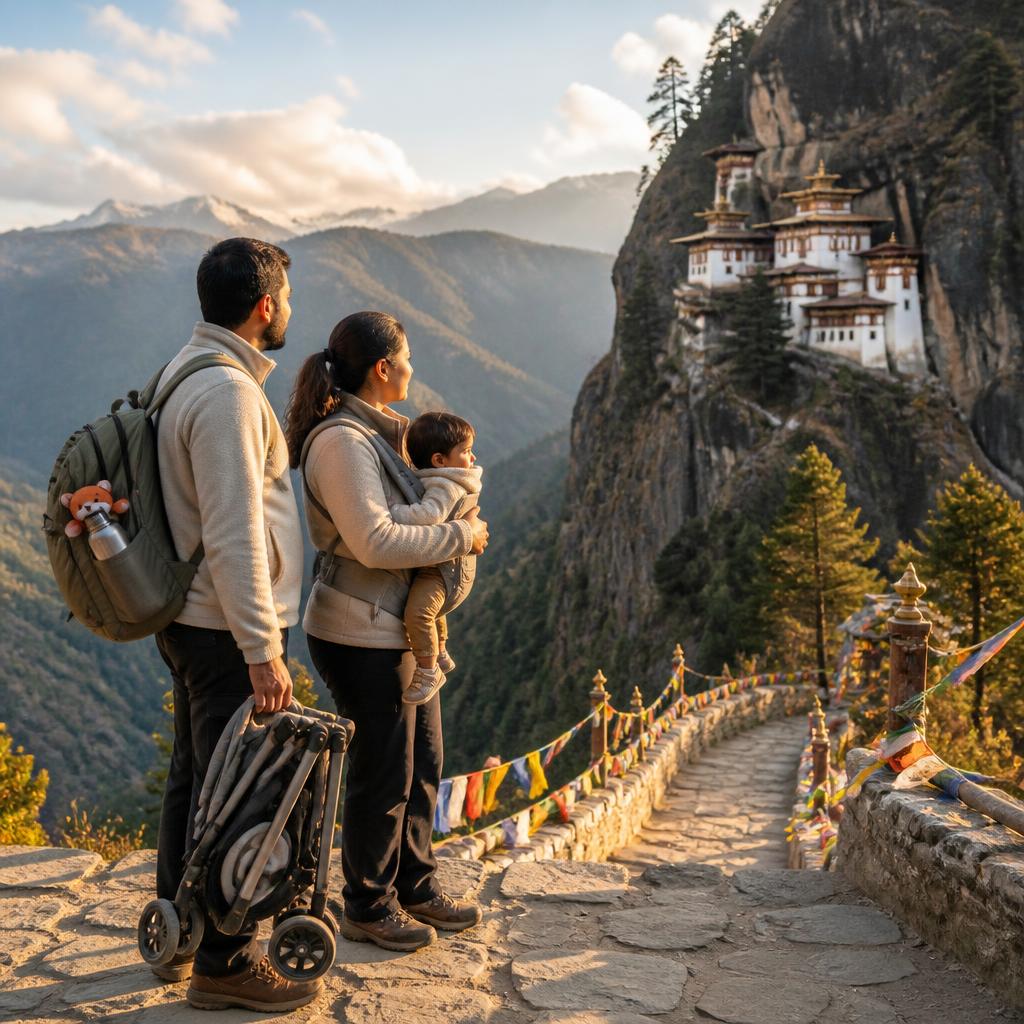
Deciding between a stroller and a carrier depends on where you plan to go. Strollers are convenient in town areas and hotel grounds, but many Bhutan attractions and valley pathways are uneven or have steps. A lightweight, foldable stroller plus a soft structured carrier gives flexibility: stroller for short stays and hotel use, carrier for short hikes, monastery visits or crowded markets. Practice using both before travel so your toddler is comfortable switching modes.
Food and accommodation: what to request and pack
Families should communicate dietary needs and sleep arrangements at booking. Many hotels in family‑friendly valleys have been known to provide simple child provisions (for example, milk or snacks) when informed in advance; it’s worth confirming these services before departure. Pack favourite instant snacks, a familiar sipper/cup, and any formula or special foods your toddler uses. Ask the tour operator to reserve rooms with easy access (ground floor or low stairs) and to confirm availability of kettles, extra blankets or a spare cot if needed.
Health and safety: trip medical kit and on‑ground support
Carry a small child medical kit with basics you routinely use (thermometer, fever reducer appropriate for your child’s age, ORS, plasters, antiseptic and any prescription meds). Sun protection, insect repellent suitable for toddlers and rapid access to hydration are essential. Confirm emergency contacts and nearest medical facilities with your tour operator at the start of the trip. Many travellers highlight that attentive local guides and trip captains make a big difference for family comfort—so verify who will be your on‑ground point of contact and how to reach them 24/7.
Booking checklist: questions to ask your tour operator before you confirm
Before you finalize a Bhutan package, get written answers to key points: room type and whether a cot or extra bed is included; typical daily drive times and the operator’s flexibility for extra stops or slower pacing; meal arrangements for toddlers and whether hotels can provide warm milk or simple baby food; what medical support and emergency procedures the company provides; and the name and local contact details of your guide or trip captain. It’s also helpful to read recent trip feedback about family experiences so you can set expectations. Clear, pre‑trip communication helps turn a good itinerary into a smooth, memorable family holiday.
Customer review


Article by
Deyor Experiences
India's First Travel Company To Feature On Shark Tank India. Travel with India's Largest Travel Community. Travel With Like Minded People Only With Deyor!