How Trip Captains Keep Riders Safe on High‑Altitude Bike Expeditions
A practical guide to the safety practices trip captains use on Ladakh and Spiti motorcycle rides—covering briefings, rider checks, pace and convoy management, altitude‑illness response, mechanical backup, and route decisions in bad weather.
Why specialised safety matters on Ladakh and Spiti rides
High‑altitude motorcycle expeditions through regions such as Ladakh and Spiti involve sustained physical effort, thin air, remote roads and rapidly changing weather. Unlike ordinary road trips, these routes pose risks from acute mountain sickness (AMS), steep passes, landslides and long stretches without immediate support. Experienced trip captains play a central role in reducing those risks by combining planning, real‑time judgement and on‑ground coordination so the group can enjoy the landscape while staying safe.
Structured pre‑ride briefings and daily preparation
Effective captains start every expedition with clear, structured briefings. These sessions cover the day’s route profile, expected riding time, difficult sections, mandatory rest stops and emergency procedures. Reviewers on recent Ladakh and Spiti trips repeatedly note that daily briefings helped set expectations and prevented confusion. A typical briefing also includes checks on fuel and spares, reiteration of luggage and packing rules, and reminders about posture, hydration and sun protection—small steps that reduce the chance of avoidable problems on the road.
Assessing rider fitness and handling altitude symptoms
Trip captains routinely monitor acclimatisation and rider fitness rather than relying solely on self‑reports. Captains and marshals look for early signs of AMS—headache, nausea, breathlessness or poor coordination—and take immediate action: slowing the pace, enforcing rest, providing oxygen or relocating a rider to lower altitude if necessary. Multiple recent reviews describe captains stepping in to assist riders with altitude‑related discomfort and ensuring those riders received timely attention. That hands‑on approach is a primary reason groups complete these routes safely.
Pace control and convoy management
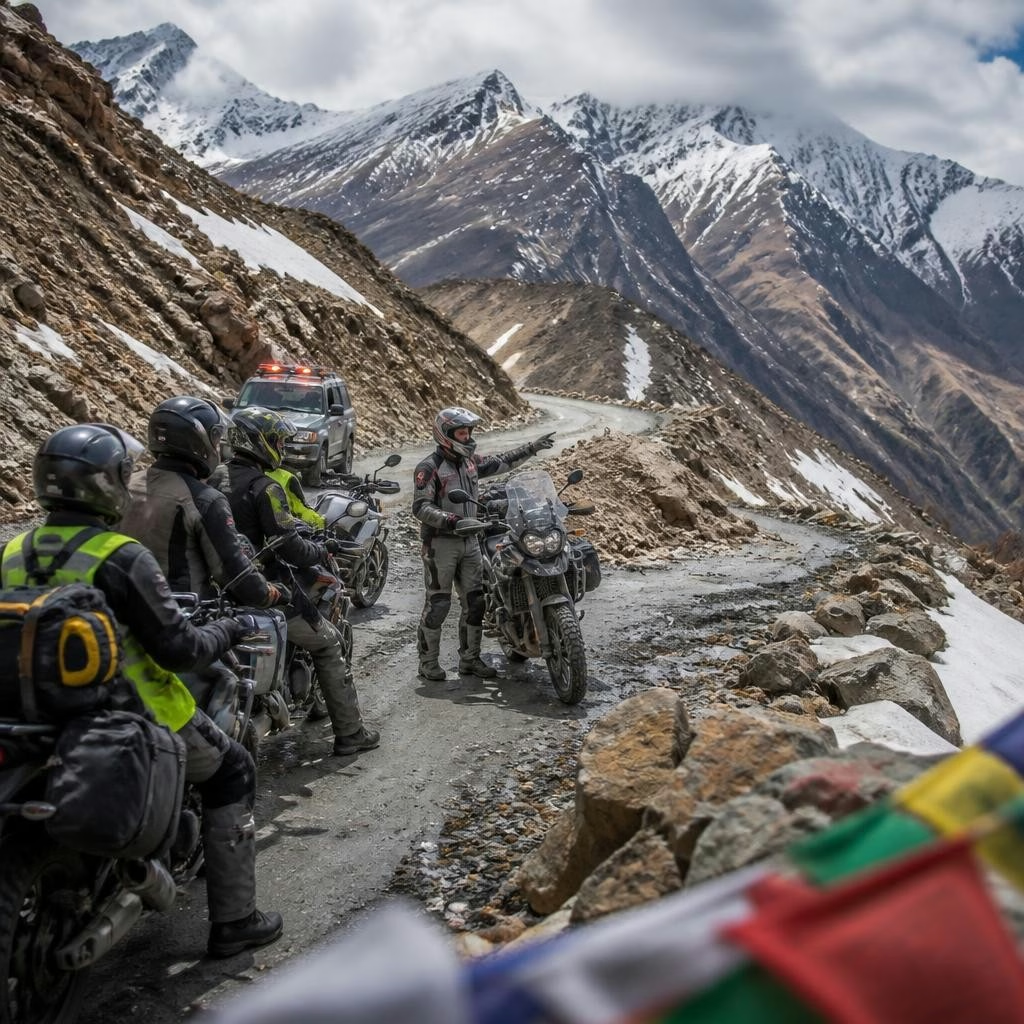
Managing group speed and spacing is one of the captain’s most important day‑to‑day tasks. Captains set a realistic group pace that factors in terrain, weather and the least experienced rider. Marshals position themselves at key points in the convoy—leading on technical stretches, riding centrally on long ascents and acting as sweepers at the rear. Reviews repeatedly praise marshals and captains for their professionalism in keeping the convoy organised, coordinating stoppages and preventing dangerous bunching on narrow mountain roads.
Mechanical backup and coordinating rescue resources
Mechanical reliability and timely recovery are essential on long high‑altitude routes. Trip teams commonly include a backup vehicle and a mechanic; reviewers on multi‑day riding trips highlight the value of having a mechanic and a support van to transport riders or bikes when needed. Captains also maintain contact plans with local recovery services where available, and they decide when a rider or bike should be evacuated to a safer location. Having these contingencies planned in advance shortens response times and reduces risk in remote areas.
Making route calls in landslides, bad weather and other hazards
Mountain weather and road conditions can change quickly; captains must make timely route calls to keep the group safe. That can mean rerouting, delaying a pass crossing, reducing daily distance or, in extreme cases, abandoning a segment. Review feedback shows captains frequently made conservative, safety‑first decisions when confronted with challenging roads or poor visibility, and those calls were key to avoiding accidents. Clear reasoning and decisive communication are what make these difficult choices effective.
What riders should expect and how to prepare
Riders can maximise safety by following the captain’s guidance, packing appropriate gear, maintaining hydration and communicating honestly about fitness or symptoms. Before booking, confirm whether the trip includes a backup vehicle, mechanic and daily briefings, and ask for clarity on luggage policies and bike condition—areas some travellers have flagged as needing clearer communication. Trusting the on‑ground team, keeping realistic expectations and preparing physically will help you benefit from the captains’ safety practices and complete a high‑altitude expedition with confidence.
Article by
Deyor Experiences
India's First Travel Company To Feature On Shark Tank India. Travel with India's Largest Travel Community. Travel With Like Minded People Only With Deyor!