Joining a Ladakh Bike Group Trip as a Complete Beginner: Skills, Fears, and On‑Tour Support
A practical guide for first‑time riders considering a Deyor Ladakh bike group trip — what minimal riding skills and preparation you need, how captains, marshals and backup teams support beginners on the road, and tips to ride safely at your own pace.
Who this guide is for
This article is aimed at riders who are excited about a Ladakh bike group trip but worry they are not ‘pro’ enough. It assumes you can ride a motorcycle on open roads but may have limited experience on long, high‑altitude, or off‑paved routes. It draws on typical Deyor group‑tour features and customer experience: supportive trip captains, marshals, mechanics and organised on‑ground teams who routinely assist less experienced riders.
Minimum riding skills to join confidently
You do not need to be an expert, but certain basic skills are important. Comfortable mounting, balancing at low speed, smooth clutch and brake control, and the ability to change gears confidently are essential. Practice controlled braking and slow‑speed manoeuvres in a parking lot before the trip. Also, being able to maintain a steady line on slightly uneven surfaces and to stand briefly on pegs for short off‑pavement patches will make the route easier to manage.
Pre‑trip preparation: practice and paperwork
Spend a few weeks before departure doing short practice rides that include hills and gravel if possible. Have your documents, licence, insurance and a basic first‑aid kit ready. Confirm what the tour provider supplies (helmet, riding gear, tools) and what you must bring. When in doubt, reach out to the organiser with specific questions about bike fit, tyre types and expected terrain — clarity before departure reduces anxiety on the road.
What captains and marshals do for beginners
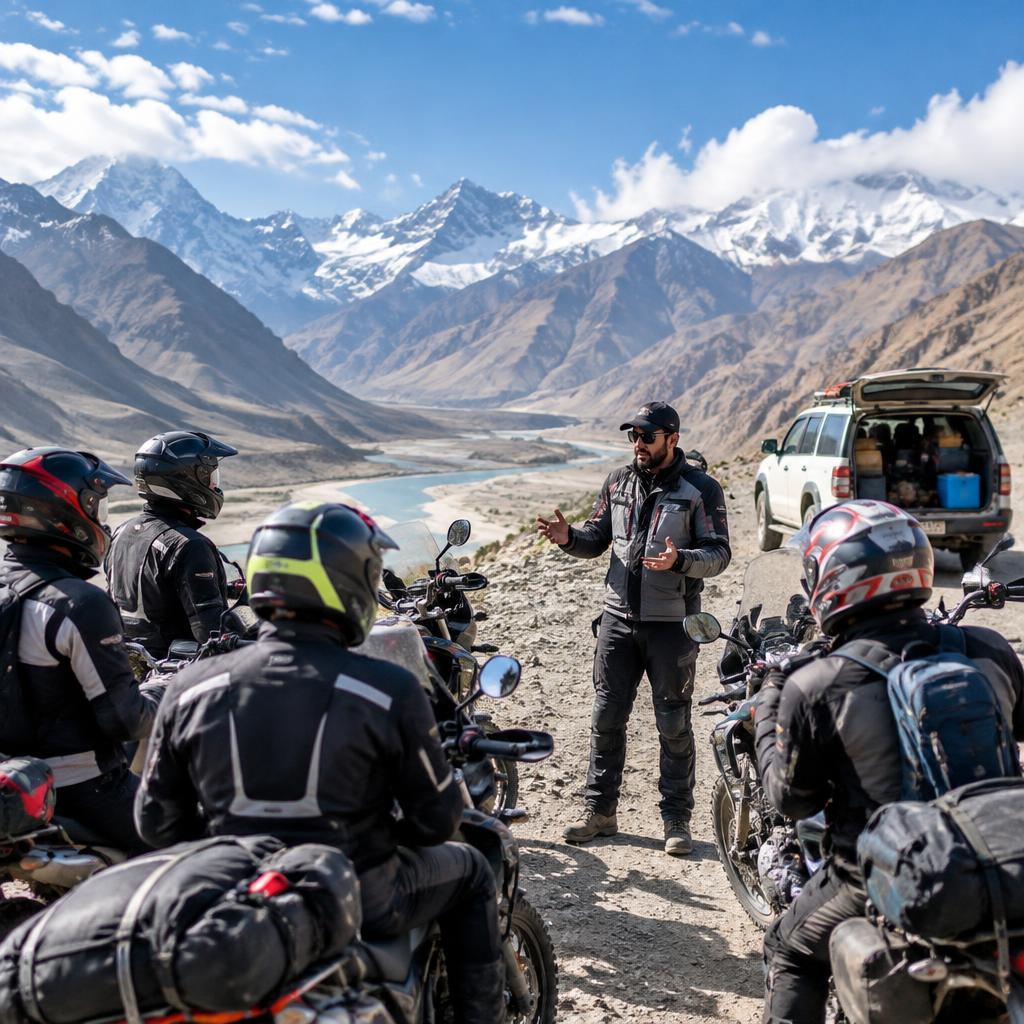
Group leaders are trained to manage diverse skill levels. Captains set daily pace, make safety calls, and coordinate with local support; marshals ride within the group to monitor and assist riders. Reviews consistently praise captains and marshals for prompt on‑road support and people management. For beginners this means guidance during tricky sections, paced riding so you are not forced to keep up with faster riders, and immediate help if you need to stop or adjust your bike.
Backup vehicles, mechanics and bike checks
A common group‑trip feature is a support vehicle that carries spare parts, luggage and can transport riders if a section becomes unsafe to continue. Experienced mechanics ride or travel with the convoy to perform quick fixes and routine checks. Expect a pre‑ride inspection each morning: brakes, tyre pressure, chain tension and basic electrical checks. These checks reduce the chance of on‑route breakdowns and are especially reassuring for those new to long rides.
Daily routine and riding at your own pace
Group itineraries are structured but typically allow flexibility. Captains plan reasonable daily distances with scheduled breaks for acclimatisation and sightseeing. If you need more frequent stops, inform the captain or a marshal — teams are accustomed to adjusting pace for safety and comfort. Riding in a group also gives visual cues (lines to follow, braking points) that help beginners learn safe habits more quickly than riding alone.
Addressing common fears and practical tips
Beginners often fear high altitude, mechanical failure, or getting left behind. Practical steps help: communicate any health concerns early, carry basic repair tools and spare tubes if recommended, and ensure your helmet and layers fit well for cold weather. During the trip, keep to the marked group position you are comfortable with (middle or rear positions are good for learning) and attend briefings — captains explain tricky passes and safe overtaking procedures. Several customers have highlighted that prompt, calm support from marshals and captains made them feel secure throughout the ride.
Deciding to join and next steps
If you meet the basic riding criteria and are willing to prepare, a guided group trip is one of the safest ways to experience Ladakh as a beginner. Contact the tour organiser with specific questions about the batch’s expected riding level, support setup (mechanic, backup vehicle) and daily distances. Bring an open mind: group structure, experienced captains and marshals, and routine bike checks are designed to help you enjoy the landscape while building confidence on two wheels.
Customer review


Article by
Deyor Experiences
India's First Travel Company To Feature On Shark Tank India. Travel with India's Largest Travel Community. Travel With Like Minded People Only With Deyor!